 Proxy for Telegram
 Proxy for LinkedIn
 Proxy for Google
 Proxy for Ebay
 Proxy for Twitter
 Proxy for TikTok
How to use proxy on Android: Android proxy settings guide

Using an Android proxy is an effective way to control your traffic on a mobile device and, ultimately, which IP address the websites you visit see. It’s a great solution for many personal and business workflows: location-based browsing, app testing, social media workflows, or having more control over how your traffic is routed.
In many cases, Android lets you do that without installing a VPN (which comes with its own set of limitations). This guide explains how to use a proxy server on Android, how to navigate the settings, and what different connection types exist.
Why use a proxy on Android, and how it works
A proxy server changes the “path” your phone’s traffic takes before reaching the designated website or app. Instead of connecting straight from your device, the request first goes through an intermediary server. Then, what the website/app sees is, in fact, that server’s IP, not your actual one.
Here are a few of the more practical reasons why this can be important:
- You need traffic to come from a specific location
- You need a separate connection setup for testing
- You’re managing multiple accounts
- You’re checking how something looks or behaves on mobile vs Wi-Fi
- You need better control and security over large-scale web workflows
Not to be confused with a VPN, a proxy usually affects only the traffic you configure it for. It doesn’t wrap your whole device connection in encryption. That’s why it tends to be the lighter and more flexible option, especially when you don’t need full-device re-routing.
If a VPN isn’t available, doesn’t fit your setup, or is simply more than you need, it often makes more sense to set up proxy on Android to accommodate your business or personal tasks.
Video guide: Android proxy settings and configuration
Step-by-step: how to add proxy in Android
To manually configure an Android proxy, follow the key steps outlined below. Keep in mind that menu titles and icons can slightly vary depending on your actual device model and OS version. However, the overall setup flow is usually the same or at least very similar.
Note: The steps below cover Android on a physical device. If you're setting up a proxy inside a desktop emulator instead, the configuration happens in the emulator itself, not in Android's system settings. See our guide to proxy setup in LDPlayer Android for that path.
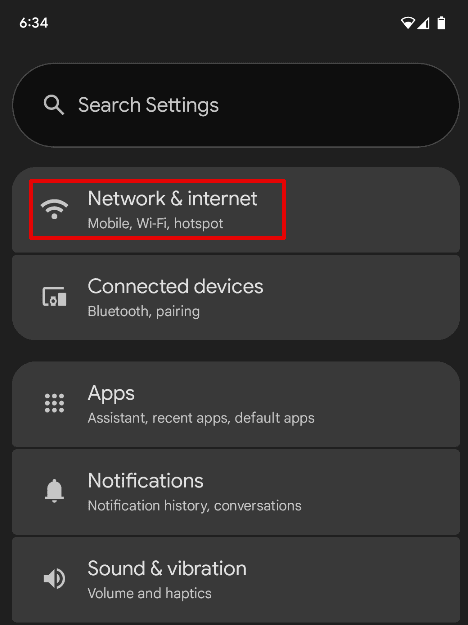
Step 1. Open the Settings menu and go to the Wi-Fi section
Start off by accessing the Settings app. Within the menu, locate and tap on “Wi-Fi” to view the list of available (and connected) wireless networks.
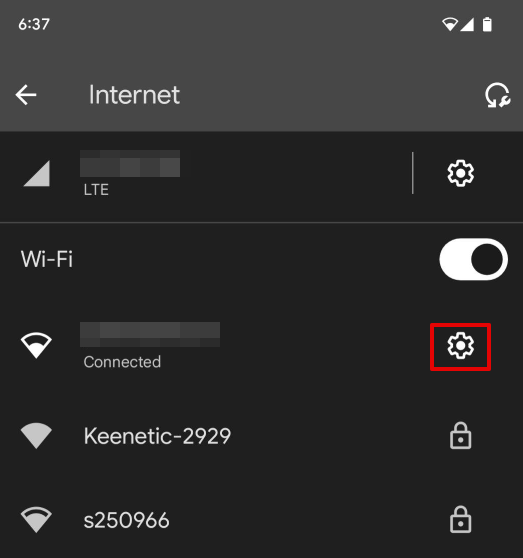
Step 2. Tap the gear icon or arrow next to the connected Wi-Fi network
Identify the Wi-Fi network you’re currently connected to. Tap the gear icon (or arrow, depending on your device) located next to the network name to access the advanced configuration settings.
Then, tap the pencil (edit) icon.
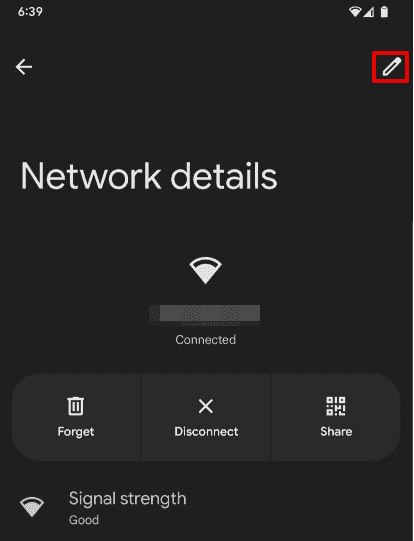
Step 3. In the network settings menu, click on “Advanced options”
Then you’ll see the “Proxy” option. Here, simply choose “Manual”.
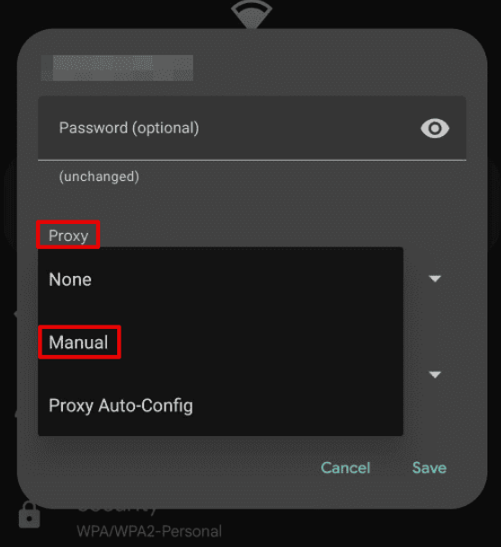
Step 4. Enter the proxy host and port
Use the host and port shown in your Proxy-Seller dashboard (or in the delivery email if you've just purchased). If needed, add bypass rules or adjust additional IP settings.
- DHCP means your device gets its IP address automatically from the network
- Static means you will enter the IP details manually. Keep in mind that if set up incorrectly, it can cause network connection issues
Once done, tap on “Save”.
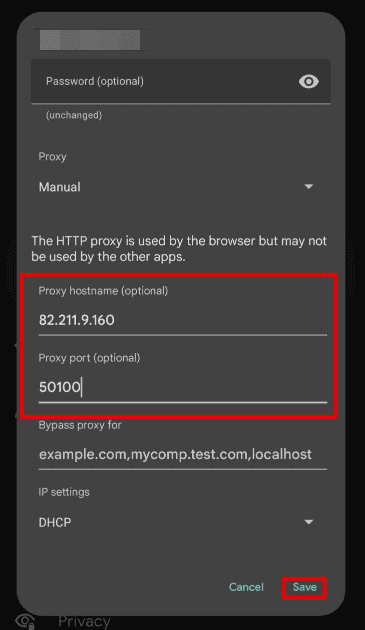
Android’s Wi-Fi proxy screen doesn’t have username/password fields, so if your proxy requires authentication, the browser will prompt for credentials on the first request. Non-browser apps that use native networking libraries usually fail silently instead of prompting.
It’s also worth noting that this Android proxy method activates the configuration only to the Wi-Fi network selected at the start. Once saved, all the traffic coming from that network will be routed through the specified server.
Automatic proxy configuration with PAC files: what works on Android
A PAC file is a small JavaScript function that Android runs locally to decide which proxy to use for each request. To set one up, go through the same menu as manual configuration (Step 4 above), but under Proxy pick Proxy Auto-Config instead of Manual. Paste the PAC URL your provider supplied (format: https://example.com/proxy.pac) and save. Like with manual configuration, there’s no field for a username or password, so authenticated proxies still rely on the browser prompt on the first request.
On paper it looks flexible. In practice, three things get in the way on Android:
- No WPAD support. Windows, macOS, and iOS discover PAC URLs automatically from the network. Android doesn’t, so you paste the URL manually on every device.
- Battery optimization breaks it. Since Android 7, the system components that fetch and evaluate PAC files (ProxyHandler and PacProcessor) run under battery optimization, so many app requests time out mid-route. On Android 7–9 the OS timed out PAC requests aggressively; on Android 10 and later this is much less common.
- Most apps ignore it. Only Chromium-based browsers (Chrome, Edge, Brave) handle PAC reliably. Firefox, YouTube, Google Play Services, and apps built on OkHttp, Flutter, or libcurl either fail silently or route around the proxy.
One clean scenario stays: MDM-managed device fleets. Samsung Knox, Android Enterprise, and SASE deployments like Cloudflare One or Zscaler all use PAC to push a single routing policy across hundreds of phones. Outside that, manual configuration is simpler and more predictable.
How to set proxy in Android for mobile data (APN and third-party apps)
Search for how to set a proxy for mobile data on Android, and you’ll find guides pointing to the Proxy and Port fields inside APN settings. Those fields do exist, but they’re not for the kind of proxy you bought from a provider, and most guides get this wrong.
They’re a leftover from the WAP-gateway era, when carriers routed mobile browsing through their own network-edge proxy. The fields are built for that carrier gateway, not for a residential, mobile, or ISP proxy pool. Even where they’re editable, most carriers lock APN editing on the SIM profile, modern data stacks route around APN-level HTTP proxying, and the auth fields expect PPP credentials for the carrier, not HTTP or SOCKS credentials for your provider.
That’s why for actual proxy routing on 4G/5G/LTE, the reliable path is a third-party app that creates a local VPN-style tunnel and routes traffic through your configured proxy from there.
So if someone wants to re-route mobile traffic, they often end up using third-party proxy apps for Android instead. That workaround is pretty simple and common in principle. The app usually creates a local VPN or “tunnel” on the device, and then routes the traffic through a custom intermediary server from there.
One example is Tun2Socks, which creates a virtual network interface for Android proxy routing on 4G/5G/LTE connections. This method definitely offers more flexibility and control for those users who need routing on cellular connections, but it also requires more setup steps.
That’s usually the best way to use a proxy on Android without root access on mobile data. And that goes double for when the built-in carrier or APN options don’t offer enough control.
Key considerations before setting up an Android proxy
Before choosing a proxy server for Android, it’s always worth double-checking a few things that can affect how smoothly the setup runs in real use cases. Yes, this adds an extra layer beyond the setup steps discussed above, but they help users avoid common misconfigurations down the line:
Match the IP type to the task
Residential IPs fit consumer web scenarios where a home IP raises fewer flags. Buy mobile proxies when the endpoint checks carrier ASNs (ad networks, sneaker sites, social apps). ISP proxies suit long stable sessions with datacenter-level speed. Datacenter IPs are the fastest and cheapest option but the easiest to detect, so use them for internal QA or non-sensitive targets.
Within any category, private proxies with a dedicated IP outperform shared pools and free proxies: no inherited blocklists, no throttling from noisy neighbours, and none of the sniffing risk that comes with free proxies of unknown provenance.
Match the protocol to the setup method
Android’s built-in Wi-Fi proxy screen only handles HTTP and HTTPS. If your proxy is SOCKS5, or you need per-app routing, the system settings won’t cover it and you’ll need a third-party app like Every Proxy, Tun2Socks, or SocksDroid.
Have credentials ready, and know where they go
The Wi-Fi proxy screen has no fields for a username or password. If your proxy requires auth, either use a third-party app that accepts them directly, or let the browser catch the prompt on the first request. That works for Chrome and Chromium-based apps and fails silently for most native ones.
Verify with an external check, not by assuming “it saved”
After setup, open a browser and hit our “My IP” tool to confirm the exit IP matches your proxy. Test one specific target app too, since Chrome may work while a native app bypasses the proxy entirely. The same logic applies when you configure proxy settings on other devices.
Troubleshooting common Android proxy issues
While configuring an Android proxy is pretty straightforward, there are several issues that may occur:
Symptom | Cause | Fix |
No internet after saving the proxy for Android | Typo in the host or port, or a protocol mismatch (HTTP entered where SOCKS5 is expected, or vice versa). | Re-check the host, port, and protocol against the values in your Proxy-Seller dashboard. Confirm the port matches the protocol type. |
Browser loads, but a specific app doesn’t | The app uses OkHttp, libcurl, Flutter, or another native networking stack that ignores Android’s system HTTP proxy. Chromium-based apps respect it; many native apps don’t. | Use a per-app proxy tool that creates a local VPN tunnel, or switch to a proxy-aware alternative for that specific app. |
Login prompt repeats on every request | Android’s Wi-Fi proxy screen has no fields for a username or password, so the browser has to ask each time. If the password contains @ : / # ? & =, Android can cut the string before the browser gets it. | Enter the credentials in the browser prompt and let it save them. URL-encode any special characters in the password first. |
Proxy is consistently slow | Distant exit location, saturated port on a shared pool, or ISP-side traffic shaping. | Test latency and ping to the endpoint. Try a closer geo if your plan allows it. If it’s slow across the whole plan, the shared pool is usually the cause. See our overview of the best mobile proxy providers if you’re evaluating alternatives. |
Proxy disconnects after the screen turns off | On OEM-skinned builds (MIUI, One UI, ColorOS), aggressive background killers can suspend the proxy app. For PAC setups, the same applies to ProxyHandler and PacProcessor. | Exclude the relevant app from battery optimization in Settings > Battery. |
While nothing advanced, these tips can help identify and correct the most common Android proxy configuration problems during the setup process.
Android configure proxy: what to check before you scale
Using an Android proxy is a pretty straightforward way to change how your device connects to the internet. It works well when you need a different IP, tighter control over how traffic moves, or a setup that fits a specific workflow better. In most cases, Android proxy configuration is quite simple on Wi-Fi, while 4G/5G setups usually need a few extra steps or third-party tools involved.
For users who need reliable IPs for diverse web workflows, Proxy-Seller offers mobile, residential, ISP, and other network types with a low-entry pakages. It gives teams a simple way to test the setup on a real Android device before scaling any further.
FAQ
Go to Settings, then Network & internet, and find the active connection with Android proxy. Tap the gear icon next to your Wi-Fi network, and open Advanced options. Change Proxy from Manual (or Proxy Auto-Config) back to None, then save. The setting is per-network, so if you use multiple Wi-Fi networks, you’ll need to repeat this on each one to fully turn the proxy off.
Android’s system HTTP proxy only reaches apps that use the platform’s networking layer. Chromium-based browsers (Chrome, Edge, Brave) respect it. Apps built on OkHttp, libcurl, Flutter, or their own native networking stack ignore it and connect directly. For those apps, use a per-app proxy tool or a proxy-aware alternative.
Android’s built-in proxy settings only apply to Wi-Fi. The Proxy and Port fields inside APN settings look like they cover mobile data, but they’re a legacy of the carrier-gateway era and don’t work with modern proxy providers. For routing mobile data through a proxy, use a third-party app that creates a local VPN-style tunnel on the device.
To set up an Android proxy:
- Open Settings, then Network & internet, and Internet.
- Tap the gear icon next to your connected Wi-Fi network.
- Open Advanced options.
- Under Proxy, select Manual.
- Enter the host and port from your proxy provider.
- Save.
The configuration applies only to that Wi-Fi network, so repeat for each network you use. For mobile data, install a third-party proxy app instead.
PROXIES FROM $0.02/IP
Ready to put this into practice?
Pick a proxy type and location, and start using it within minutes.
Instant delivery
24/7 support
Refund policy
About the author