 Proxy for Telegram
 Proxy for LinkedIn
 Proxy for Ebay
 Proxy for Twitter
 Proxy for TikTok
 Proxy for Tinder
Overview of the Anti-Detect Linken Sphere Browser
Summary generated by AI:
Linken Sphere is an anti-detect browser specifically designed to maintain anonymity online. Its primary function is to conceal real user data and substitute it with alternative information to prevent tracking.

The browser is extensively used in various internet activities where high confidentiality is crucial. It supports work with payment systems and social networks and is particularly useful in traffic arbitrage and marketing research. Linken Sphere's capability to effectively mask user data enables users to circumvent blocks and anti-fraud systems, which is vital for professionals engaged in bulk distribution of advertising and informational content. Additionally, the browser is also employed in specialized areas such as CPA networks, e-commerce, betting, and online casinos, where maintaining anonymity is key.
Video: Anti-detect Browser Review — Linken Sphere
Features of the Linken Sphere
Linken Sphere is designed with a comprehensive suite of tools aimed at optimizing and effectively addressing various online tasks. These tasks include mass profile creation and the implementation of templates and technologies to enhance user anonymity. The browser offers customization options such as a selection of themes, sound notifications, and an extensive list of language versions to cater to a global user base.
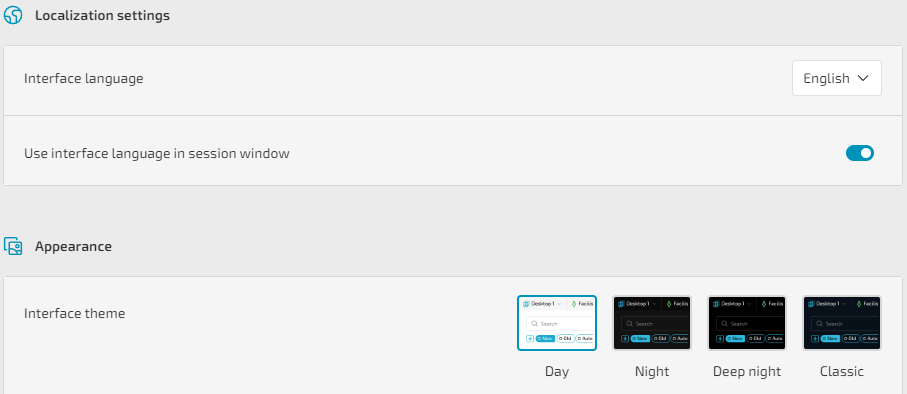
Next, we will explore key tools available in Linken Sphere to understand how they contribute to its functionality and user experience.
Functionality for Mass Actions
Linken Sphere is equipped with features that streamline browser operations, particularly focusing on bulk tasks that are essential for users managing multiple profiles and proxy servers.
- Importing and verifying proxies: The browser enables bulk importing of proxy servers, allowing users to upload a list in a supported format and subsequently verify their functionality. These proxies can then be readily assigned to any profile for use.
- Bulk profile (session) import: A significant feature is the bulk import of sessions (profiles) from a file stored on the computer. This file contains preset parameters such as browser specifics and other digital fingerprint data, facilitating the swift setup of multiple profiles.
- Mass creation and tmplates: Additionally, Linken Sphere supports the bulk creation of sessions. While new profiles automatically receive a random set of fingerprint parameters, users have the option to establish a unique template with specified parameters, referred to as a “provider”.
Enhanced Anonymity
Linken Sphere achieves a high level of anonymity through sophisticated technologies designed to mask and protect user data. The browser incorporates several key mechanisms to ensure this:
- Tenebris link: This technology utilizes its own proxy network specifically developed for Linken Sphere. It helps conceal the user's real IP address, offering a heightened level of anonymity.
- Automatic removal of traces: Linken Sphere is programmed to automatically clear cookies and browser history at the end of each session. This feature is crucial in preventing user activity from being traced across different sessions.
- Advanced incognito mode: Beyond the basic incognito mode found in other browsers, Linken Sphere's advanced version ensures that no history is saved and further masks user activity at the operating system level, rendering it nearly invisible.
These features collectively enhance the anonymity of users, ensuring secure and untraceable online activities across various platforms.
Digital Fingerprint Customization
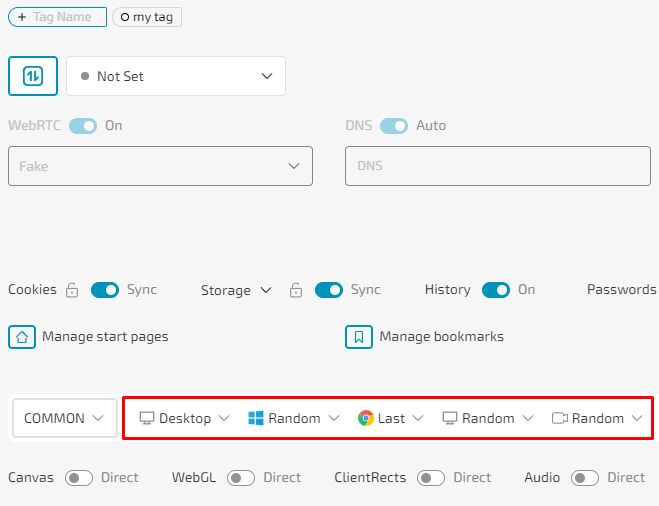
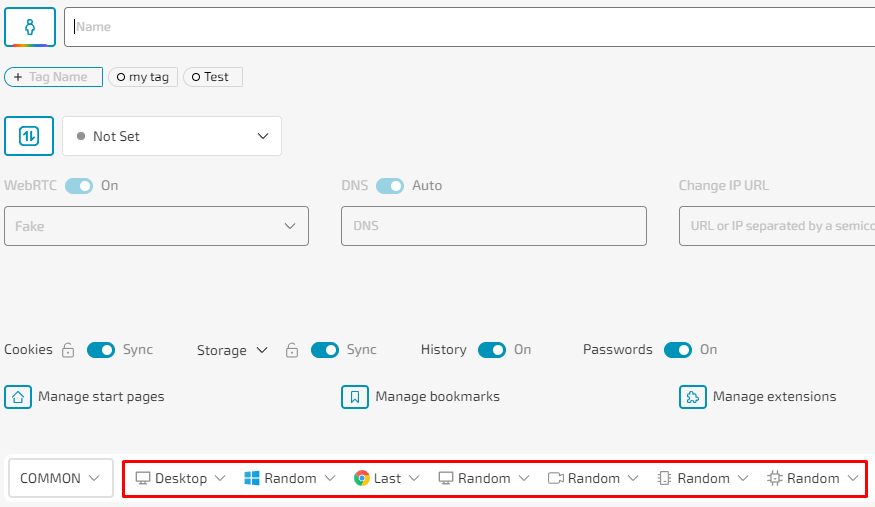
Linken Sphere, like other anti-detect browsers, offers robust customization for browser profiles, allowing users to configure unique combinations of parameters for each profile. While it is possible to create profiles with a randomly generated set of parameters, users also have the option to manually specify each parameter to ensure the profile meets specific requirements. These parameters include:
- device type (PC, mobile device, or tablet);
- OS version (specific to each type of device);
- browser kernel version (tailored to mimic the intended browsing environment);
- screen resolution, fonts, language (can be adjusted to match the user's typical usage patterns);
- video card, number of processor cores, and RAM (hardware specifications can be specifically configured).
Additionally, Linken Sphere allows for the imposition of noise on technologies such as WebGL, Canvas, and WebRTC to further obscure digital footprints. Other customizable settings include activation of the “Do not track” feature and configuration of proxy and DNS servers, enhancing both privacy and functionality.
Browser Subscription Plans
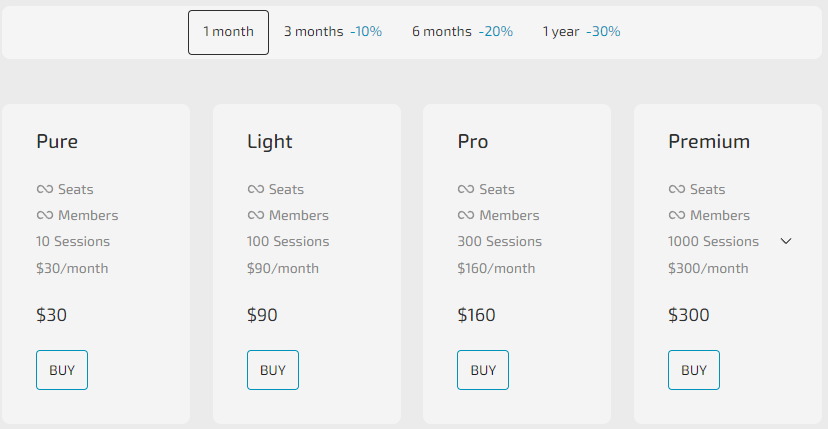
Linken Sphere offers four distinct pricing plans, each providing access to the browser's main features starting from the most basic version. The primary difference between these plans lies in the number of sessions each plan allows. It's important to note that, unlike some other tools, Linken Sphere does not offer a free version of its browser.
Pure
The “Pure” plan in Linken Sphere includes basic features, providing access to 10 sessions per month and a local API. This makes it suitable for individual users or those running small projects. Additionally, it supports mobile emulation and teamwork capabilities. Priced at $30 per month, this plan offers an affordable option for beginners looking to explore the capabilities of an anti-detection browser without making a significant financial commitment.
Light
The “Light” plan in Linken Sphere offers access to 100 sessions per month, catering to the needs of more advanced users or small teams. Priced at $90 per month, this plan is well-suited for companies and freelancers who require additional resources to effectively manage their online activities.
Pro
The “Pro” plan in Linken Sphere is tailored for professionals and large-scale projects, providing 300 sessions per month at a cost of $160. This plan includes all key features and is ideal for users who require high throughput for managing multiple profiles. It is particularly valuable in environments that demand scalability and the ability to swiftly adapt to changing project requirements.
Premium
The “Premium” plan is Linken Sphere's most advanced offering, providing 1000 sessions per month at a cost of $300. This plan is ideally suited for large commercial enterprises that need extensive session capacity and full access to all features. It is particularly beneficial for large organizations and specialized agencies that extensively utilize anti-detect technologies for large-scale internet operations, ensuring a high level of anonymity and security for accounts.
Additionally, users can benefit from a discount structure based on the subscription length: 10% off for a 3-month payment, 20% off for a 6-month payment, and 30% off for an annual subscription. Opting for a longer subscription term not only reduces the monthly cost but also provides stability and continuity in using the tool.
Linken Sphere Interface
The browser interface is a comprehensive workspace, featuring many useful tabs and settings that enable you to customize your workflow. Let’s explore the main ones in more detail.
Desktop
After launching Linken Sphere, the user is presented with the main desktop. This area is central for managing sessions and tags. Once a tag is created, it can be applied to any profile to facilitate easy identification across different projects. Profiles are also launched from this tab.
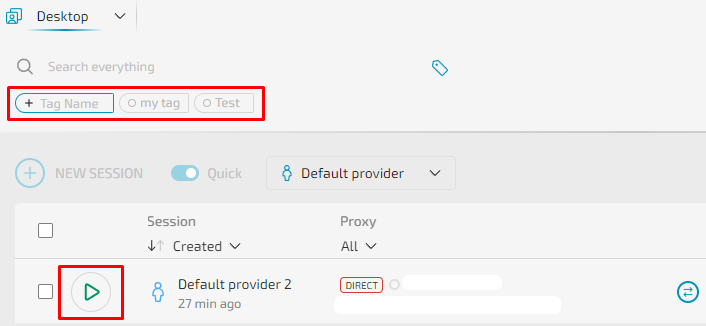
Interaction with profiles includes the following options:
- profiles can be sorted by specific parameters;
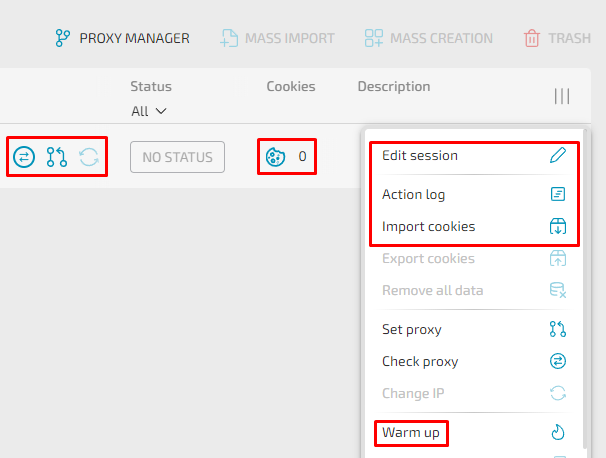
- proxies can be integrated using the “Proxy Manager”, which also allows for functionality checks;
- users have the ability to import cookie files into a profile;
- adding a description and setting a specific status to a profile is possible;
- sessions can be edited, and the action log can be viewed.
Additionally, the “Warm up” option is notable. This feature enables the collection of cookie files from specified websites to increase the trust level of the profile.
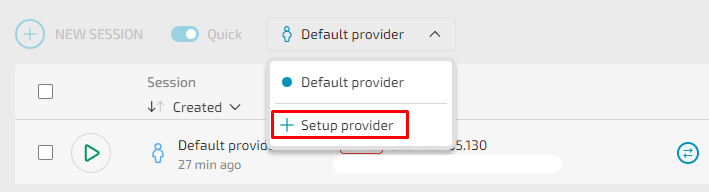
Another useful feature in this tab is the ability to configure a template for profiles, which can be utilized for quick or mass creation of profiles later on. This option is referred to as “Setup provider”. Upon clicking this button, a menu appears where it is possible to specify which parameters should be defined manually and which can be selected randomly.
New Session
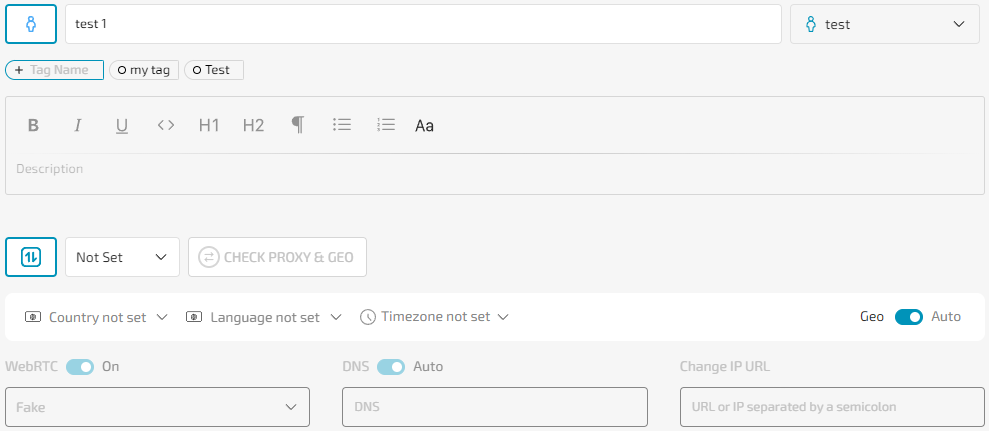
Next, let's examine the “New session” tab, which facilitates the creation of a browser profile. By activating the “Quick” checkbox, a new session can be automatically created with a random set of parameters, unless a specific template from the item on the right is chosen.

In the new window, all the parameters that can be edited or overlaid with noise will be displayed, and there are options to integrate proxy servers and cookies. The detailed process of creating a new session will be explored later in the article.
Proxy Manager
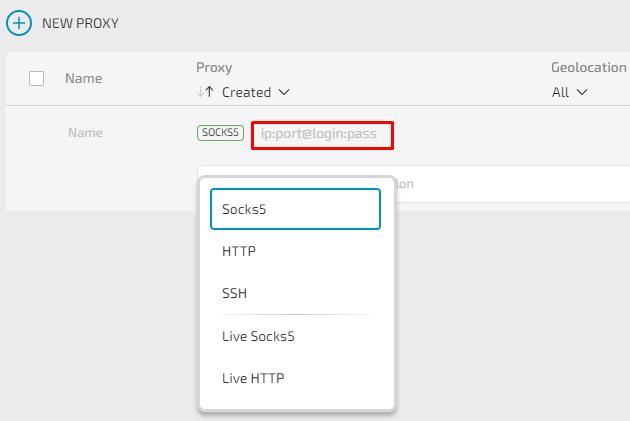
The next tab is dedicated to integrating and configuring proxy servers. The process involves selecting a connection protocol and entering the data in the specified format. The process involves selecting a connection protocol and entering the data in the specified format — for example, using socks5 proxies when you need flexible traffic routing.
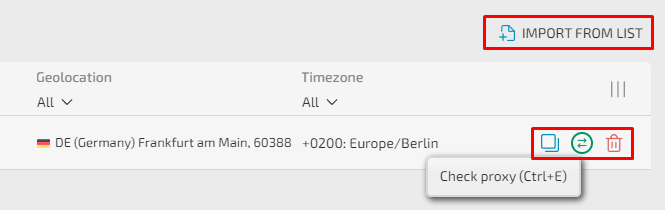
Additionally, there is a function to import proxies as a list, which facilitates their mass addition. Additionally, there is a function to import proxies as a list, which facilitates their mass addition. If your targets support IPv6, you can also add an IPv6 proxy in the same workflow. Within the workspace, users can view the location of each proxy and, if necessary, verify their operability.
Mass Import
The “Mass import” feature streamlines the process of creating sessions by enabling users to upload necessary data, including browser configurations and device settings, from pre-prepared files. Users can choose the files they wish to import, and the program automatically recognizes and applies the required settings. It also offers a preview of the configured sessions. If certain configuration settings are not recognized, they are marked with a dash, allowing users the opportunity to edit or delete the sessions before finalizing their creation.
Mass Creation
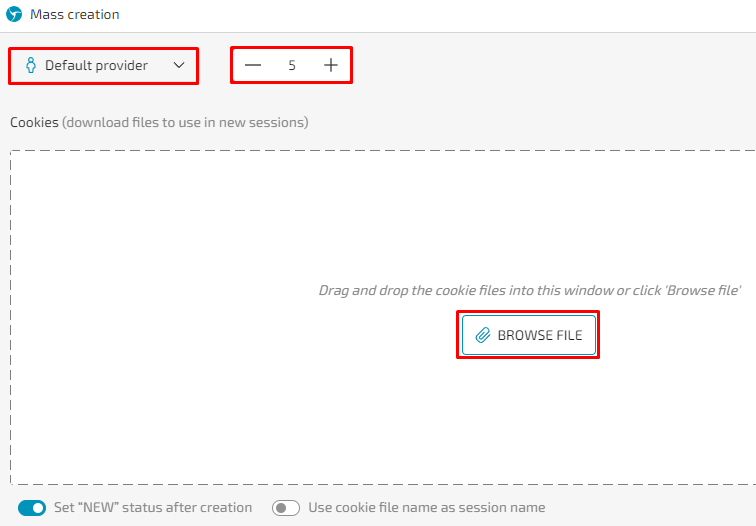
This tab enables users to create profiles in bulk. To do so, users select a template (provider) and specify the required number of profiles they wish to create. Additionally, there is an option to upload cookies, which will be applied to the newly created sessions.
Trash
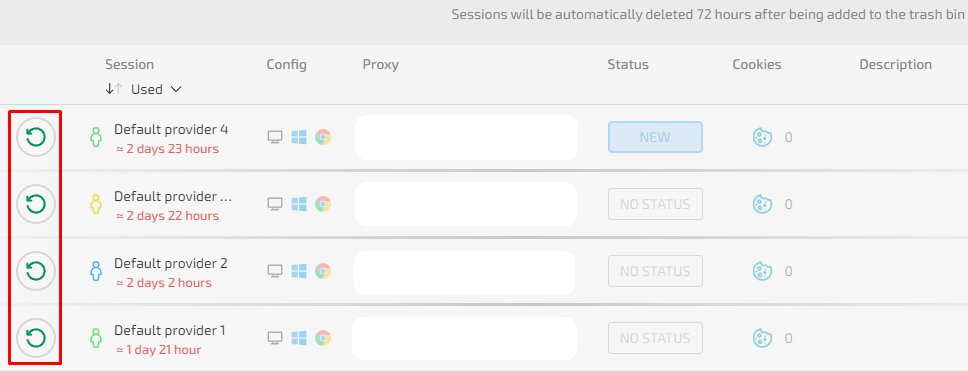
Deleted profiles can be restored through the “Trash” tab. This section displays all the essential information about each profile, making it easier to identify and select the specific profile you wish to restore.
Account license
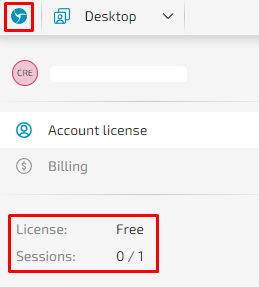
After clicking on the icon in the upper left corner and accessing the additional menu, the user can view information about their subscription and see the number of available sessions.
In the “Account license” tab, users can view available tariff plans, compare them, and purchase the desired plan if necessary.
The “Billing” tab offers detailed information about the user's purchased subscription. Here, users can view the name of the subscription, the number of available sessions, the validity period, the purchase date, the amount paid, and the status of the subscription.
Teams
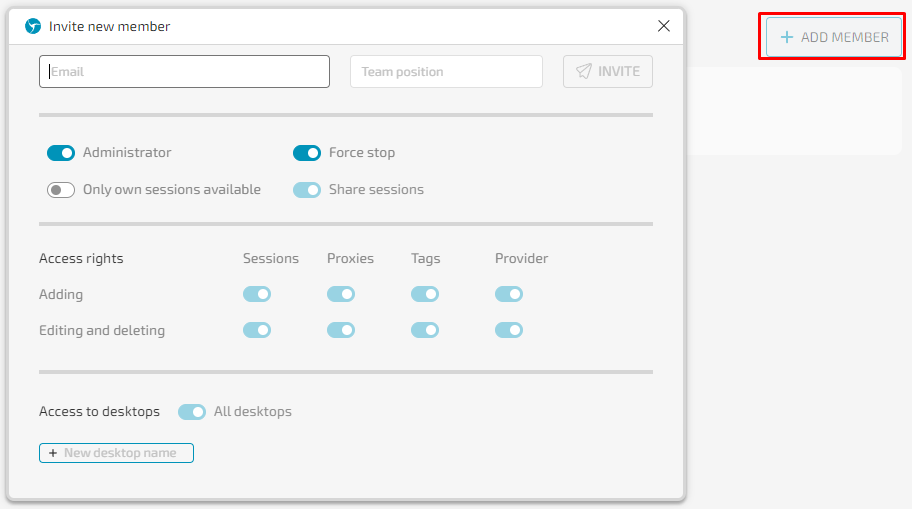
This tab is specifically designed to facilitate teamwork. Initially, you set the team name and then proceed to invite employees.
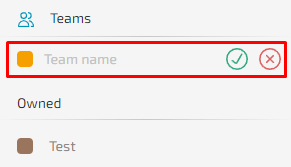
When sending invitations, you can specify permissions and access rights for each team member. Additionally, assigning roles within the team is possible, which simplifies management and the delegation of responsibilities. All key parameters are illustrated in the screenshot below.
Performance and Architecture of Linken Sphere Browser
Linken Sphere browser is built for speed and efficiency. Extensive C++ coding under the hood helps save system resources while boosting performance. Unlike competitors that split the browser control into multiple Chromium processes or rely heavily on JavaScript control windows, Linken Sphere runs sessions within a single primary process.
This design enhances interaction speed and deep substitution capability. It’s why the Linken Sphere browser alternative is widely regarded as the fastest, most productive antidetect browser available.
You’ll notice real benefits from its technical optimizations, including:
- zero-copy data handling to reduce processing overhead;
- Just-in-time (JIT) compilation improvements for faster embedded JavaScript execution;
- internal garbage collection tuning to minimize pauses;
- reduced inter-process communication (IPC) overhead for smoother performance.
Additionally, integrating with high-quality proxies like those from Proxy-Seller further optimizes your sessions. Proxy-Seller offers reliable and geographically diverse options, including residential proxies, ISP proxies, mobile, and datacenter proxies across 220+ countries and 800+ subnets. This means:
- faster, more stable connections tailored for Linken Sphere antidetect browser use;
- enhanced anonymity through a wide variety of proxies;
- easy proxy management via Proxy-Seller’s 24/7 support and user-friendly dashboard.
Typical use cases where combining the Linken Sphere anti-detect browser with Proxy-Seller’s proxies helps you excel:
- web scraping tasks requiring stealth and speed (read more “Is web scraping legal?”);
- social media account management across multiple profiles;
- online gaming where regional IPs and low latency matter. For mobile-like connectivity in these scenarios, a mobile proxy 4g can help you emulate cellular traffic more realistically;
- ad verification needing accurate, undetectable access from various locations.
To maximize your experience, remember to:
- Select proxy types based on your use case (residential for highest stealth, datacenter for speed).
- Rotate proxy IPs regularly within Linken Sphere sessions.
- Use Proxy-Seller’s dashboard to monitor and adjust proxy performance live.
This practical synergy ensures you get not just a powerful antidetect browser but a complete solution for anonymous, efficient online tasks.
Creating a Profile and Setting Up a Proxy in Linken Sphere
-
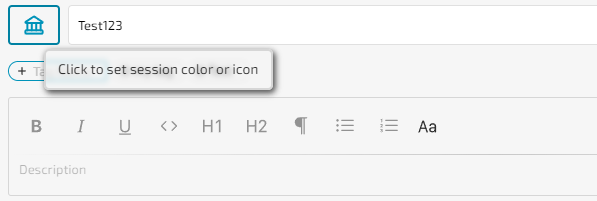
On the browser home page, click “New session”. In the new window, enter a name for the profile and select an icon for display. Optionally, add a description below.
-
You can then specify a proxy server. Detailed instructions on how to find it are provided in this article.

-
The next step allows you to upload cookies if necessary. Optionally, you can disable synchronization and the saving of history and passwords while using the profile. Further settings allow you to set the start page, download bookmarks, and integrate extensions.

-
Follow this with the digital fingerprint settings where you define the device type, OS version, screen resolution, graphics core version, and other technical characteristics. You can also set up a custom User Agent here.

-
The final step involves superimposing noise on Canvas and WebGL technologies and activating the “Do not track” option to enhance the profile’s privacy. Once all data is entered, click “Create”.

-
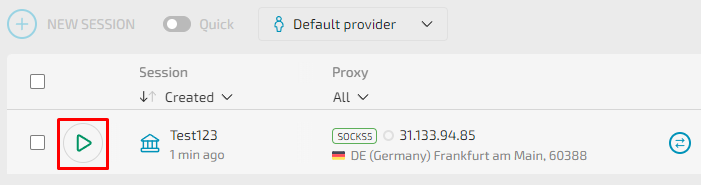
The newly created profile will appear on the main page of the browser. To begin working with it, click the start button.
In conclusion, the browser's multifunctionality stands out, along with access to its full functionality regardless of the subscription plan chosen. A particularly noteworthy feature is the automatic collection of cookies for profiles, which significantly enhances the trust factor during various online activities. Additionally, the tools for mass creation and import of profiles offer substantial time savings for both individual users and teams, streamlining the task completion process.
Chromium-Based Architecture of Linken Sphere Browser
In this section, you’ll learn how the Linken Sphere browser moved from using the QT WebEngine to a full Chromium core engine. This change unlocks the full Chrome experience. You get real browser features like extensions, bookmarks, start pages, and password storage. Unlike most alternatives that rely on simple window cloning, Linken Sphere rises above by deeply customizing Chromium’s core. This approach is more complex but much more effective for fingerprinting protection.
Why Deep Customization?
Simple window cloning limits control. It often breaks features or causes stability issues. Linken Sphere avoids these pitfalls by integrating a patched Chromium fork directly at the C++ layer, focusing on minimizing fingerprint leaks. For example, the Blink rendering engine gets tailored patches that reduce distinct browser artifacts. This native integration also skips the use of Chromium Embedded Framework (CEF) alternatives, which are common in other antidetect browsers but can create detection risks.
The browser retains fast, stable, and feature-rich operation, coupled with innovative interaction possibilities unique to the Linken Sphere anti-detect browser. It also supports a proprietary extension API, allowing compatibility with extensions designed for the platform without exposing standard Chrome extension behaviors.
Here’s what you get with this architecture:
- full Chrome functionalities (extensions, bookmarks, password storage);
- native Chromium rendering with patched fingerprint vectors;
- no reliance on CEF, ensuring cleaner, less detectable runtime;
- proprietary extension API compatibility for better security;
- faster, more stable browsing with deeper customization than typical browsers.
Transitioning to the full Chromium core sets the Linken Sphere browser alternative apart by combining strong antidetect capabilities with a user-friendly, familiar browsing experience.
Hybrid Antidetect Technology in Linken Sphere Antidetect Browser
Traditional native fingerprint masking or simple noise injection often falls short. They either produce detectable anomalies or outright break functionality. You’ll learn how Linken Sphere antidetect browser solves this with cutting-edge hybrid antidetect technology.
This system doesn’t just alter your browser fingerprint. Instead, it adapts dynamically to the fingerprint of your real computer. From there, it creates hundreds of plausible but unique configurations. It automatically emulates hardware profiles that look natural to detection systems.
Benefits of this hybrid approach include:
- complete invisibility on MacOS;
- significant detection resistance improvements on Windows;
- seamless integration with real hardware signatures.
Technical features you’ll benefit from are:
- Coverage of all major fingerprinting vectors: Canvas, WebGL, Fonts, AudioContext, Hardware Concurrency, User Agent, Timezone, and WebRTC.
- Machine learning-driven detection to spot fingerprint anomalies in real time.
- Hardware emulation layers that interact with OS APIs like DirectX and CoreGraphics.
- Noise injection using stochastic models for natural variation instead of fixed patterns.
This combination of adaptation, emulation, and smart noise makes the Linken Sphere anti-detect browser one of the most reliable tools for real-world undetectability.
To sum it up, the hybrid antidetect works by:
- detecting your actual device fingerprint automatically;
- generating multiple plausible profiles around real hardware traits;
- employing ML to continuously refine masking for diverse scenarios;
- injecting realistic noise to avoid pattern recognition.
This innovative approach helps you stay well ahead of detection technologies without sacrificing stability or performance.