

The best proxy providers in 2026 are not necessarily those with the largest IP pools or the most additional features. Those parts get a lot of attention, sure, but it is rarely the full story.
Buyers also look at network coverage, session control, geo targeting, pricing, support, and most importantly, whether a provider actually fits the work they need to do, be it SERP monitoring, ad verification, QA, automation, or public web data collection.
This guide breaks down the best proxy providers for different use cases, shows what to evaluate before choosing one, and highlights the options that make the most sense for teams that need infrastructure they can actually rely on at scale.
Put simply, a proxy is the IP layer between your system and the website you’re trying to reach. Your request goes through that network first, so it reaches the site using a different IP address, and then sends the response back to you. That setup matters when a business needs stable, repeatable access to public data across different countries, sessions, or devices.
For SEO teams, proxies help with rank tracking, SERP checks, and marketplace monitoring. For ad teams, they make geo-accurate ad review possible.
For developers, QA teams, and automation-heavy workflows, they make it much easier to test services across different environments, run session-based tasks, and keep everything moving at scale. The same goes for e-commerce and market intelligence teams — they all rely on proxies for catalog monitoring, pricing checks, and competitor research.
The IP type matters too, because each one is built differently and works best in different scenarios:
Residential proxies use real household IP addresses, which makes them well-suited to geo-sensitive tasks, rotation-heavy workflows, and public web data collection.
Mobile proxy networks use IPs from 4G/5G mobile carriers, making them useful for mobile-focused testing, app workflows, and carrier-specific checks.
ISP proxy networks combine static sessions with ISP-issued identity, which makes them a strong fit for stable long-session tasks.
Datacenter proxies come from server infrastructure and are typically chosen for fast speed, efficiency, and scale.
IPv6 proxies use the newer IP protocol and are most useful in environments where IPv6 compatibility is already in place.
The good news is that the top providers out there offer buyers more than one network type to work with, which is where the real value lies. One network model will not cover every use case, and trying to force it usually creates more friction than it solves.
Making the right choice comes down to workload first, branding second. A cheap starting price may look good, but that alone does not help much if the provider lacks the right locations, session settings, or consistency for real production work. Same story with premium proxy providers — additional features, more precise targeting, and extra compliance are all valuable, of course, but only if your business actually needs it.
When comparing the best proxy providers, focus on these points:
IP type and quality: residential, ISP, mobile, datacenter, IPv4, and IPv6 all serve different use cases
Geo targeting depth: country, city, ASN, and carrier targeting matter for SEO, ad review, testing, and customers in specific markets
Rotation and sticky sessions: some workflows need rotation on every request, while others need stable sessions for a single user
Protocol and authentication support: HTTP(S), SOCKS5, user/pass, and IP allowlisting should be simple to configure across different protocols
Operational stability: uptime, predictable sessions, and clean response consistency matter more than simply a large pool size
Ease of management: intuitive dashboards, APIs, and usage analytics help multiple users manage traffic with ease
Support quality: when IP networks sit inside critical business workflows, responsive support matters quite a lot
Pricing logic: compare per-GB, per-IP, and monthly models instead of just headline entry prices
Use-case fit: the best proxy service for large-scale data collection may not be the right one for QA, automation, or ad verification
This approach makes comparison a lot cleaner to decide on the right solution for your team. Otherwise, people just default to the loudest brand in the room, which is not always the smartest move for their workflow or budget.
Here is a quick snapshot of the best proxy providers that we will explore in more depth below:
|
Provider |
Best For |
IP Types |
Geo / IP Scale |
Entry Price* |
Standout Strength |
|---|---|---|---|---|---|
|
Proxy-Seller |
SMBs + scale |
Residential, ISP, Mobile, IPv4, IPv6 |
220+ countries/regions on residential |
$0.7/GB |
Best balance |
|
Bright Data |
Enterprise data ops |
Residential, ISP, Mobile, Datacenter |
150M+ residential, 195 countries |
$5.88/GB |
Platform depth |
|
Oxylabs |
Enterprise crawling |
Residential, ISP, Mobile, Datacenter |
175M+ residential, 195 locations |
$8/GB |
Scale + support |
|
Decodo |
Mid-market value |
Residential, ISP, Mobile, Datacenter |
115M+ IPs, 195+ locations |
$2/GB |
Usability + price |
|
Webshare |
Budget entry |
Residential, Static residential, Datacenter |
80M+ residential |
$1.40/GB |
Affordable start |
|
SOAX |
Premium-lite mid-market |
Residential, Mobile, US Datacenter |
191M+ IPs, 155M+ residential |
$3.60/GB |
Polished stack |
|
IPRoyal |
Flexible smaller projects |
Residential, ISP, Mobile, Datacenter |
32M+ residential, 195+ countries |
$1.75/GB |
Product variety |
Public starting prices and pricing plans vary by product and billing model.
The best proxy providers below stand out for different reasons. Some are stronger on enterprise tooling, some on cost efficiency, and others simply do a better job at covering multiple workflow categories without overcomplicating the entire setup.
Proxy-Seller is the strongest all-around option given its wide product range, straightforward pricing, and a very practical fit for real workloads. Its catalog includes residential, ISP, mobile, IPv4, and IPv6 IP nodes, which makes it easier for teams to cover virtually all their workflows and account operations without splitting across several vendors.
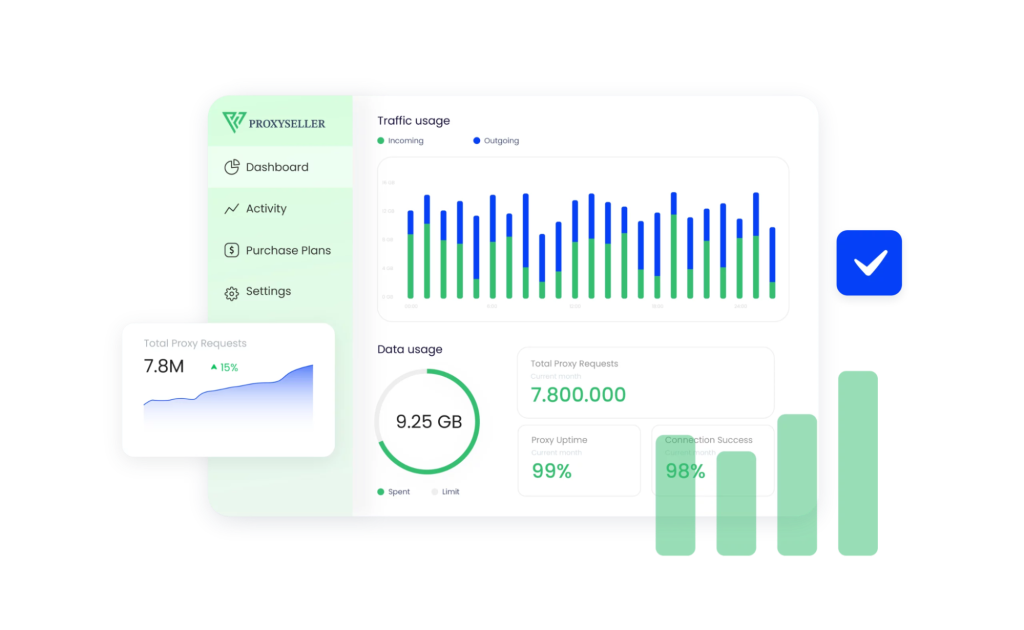
Pricing is much more affordable than most competitors by current standards, with residential proxies starting at just $0.7/GB. There’s also a straightforward 3-day trial for just $1.99 for teams who want to see it in action before starting to scale.
The platform supports HTTP(S) and SOCKS5, along with username/password authentication and IP allowlisting. For buyers comparing the best proxy seller for flexibility, cost control, and room to scale, this is simply the most balanced option in the list.
Key features:
Residential, ISP, mobile, IPv4, and IPv6 coverage
HTTP(S) and SOCKS5 support
Username/password and IP allowlisting authentication
220+ countries and regions on residential connections
Competitive entry pricing across several categories
Best for teams that want one provider that can handle different use cases without jumping straight into enterprise-level features and pricing. For mixed workloads, it is the best proxy provider overall.
Bright Data remains one of the most advanced top proxy services for large-scale data operations. Its residential network is publicly listed at 150M+ IPs across 195 countries, with strong geo targeting and a broader platform that also includes APIs, web scraping tools, and datacenter products.
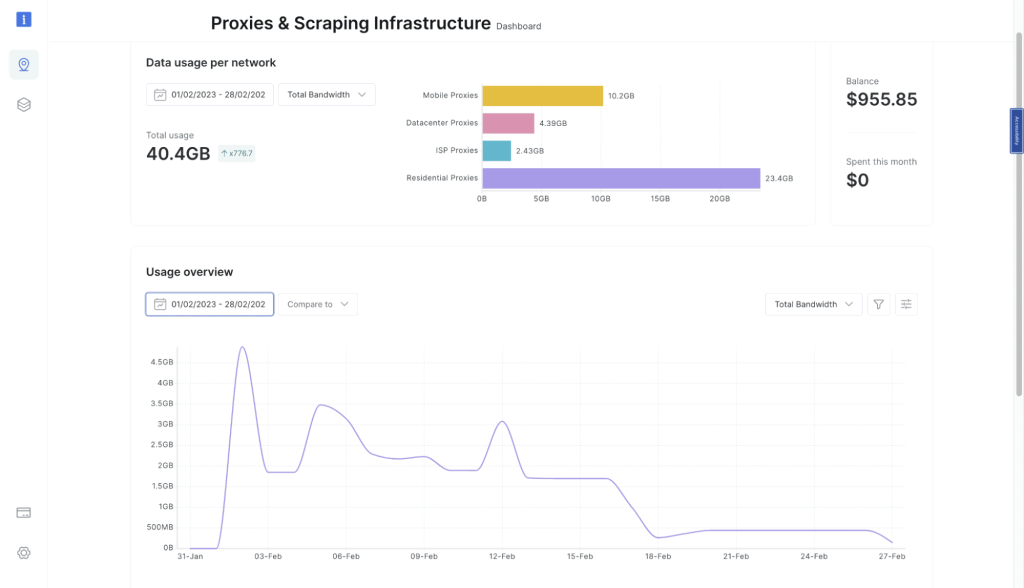
Source: Proxyway
Residential pricing starts from $5.88/GB, while the company also advertises 1.3M+ ISP and 7M+ cellular IP addresses assigned in broader network materials. The trade-off is pretty obvious though — it’s expensive, and the ecosystem can feel heavier than what smaller teams actually need.
Key features:
150M+ IP pool
Coverage across 195 countries
Fine-grained geo targeting
Large enterprise-oriented platform ecosystem
Strong fit for advanced data collection programs
Best for enterprise teams that can justify a bigger budget and actually need more advanced features on top of core IP network infrastructure. It is one of the best proxy server providers for scale, no doubt about that, but not the one people usually pick when cost efficiency is a top priority.
Oxylabs is another enterprise-grade name that absolutely belongs in any serious top-rated proxy providers reliability comparison. Its public numbers look strong — 175M+ high-quality IPs across 195 countries.
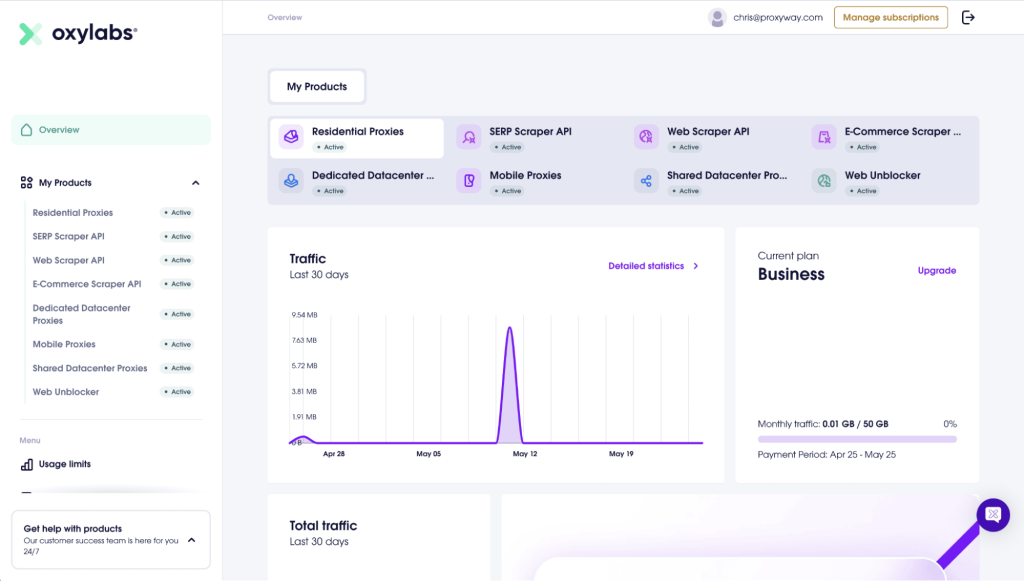
Source: Proxyway
Pricing starts at $8/GB, so yes, realistically, this is more of a fit for large crawling operations, data teams, and automation-heavy setups where stability, support, and overall maturity matter more than keeping spend low.
Key features:
175M+ IP pool
All network types supported
Broad geo coverage
Enterprise-focused support model
Strong fit for large-scale collection workloads
Best for organizations running demanding systems at scale. In any case, Oxylabs is clearly a solid platform for high-volume traffic in 2026, though it is harder to justify for smaller teams.
Decodo is one of the more practical mid-market options among the best proxy providers 2026 has to offer. Its public pricing starts at $2/GB, while its network is positioned at 115M+ IPs across 195+ locations.
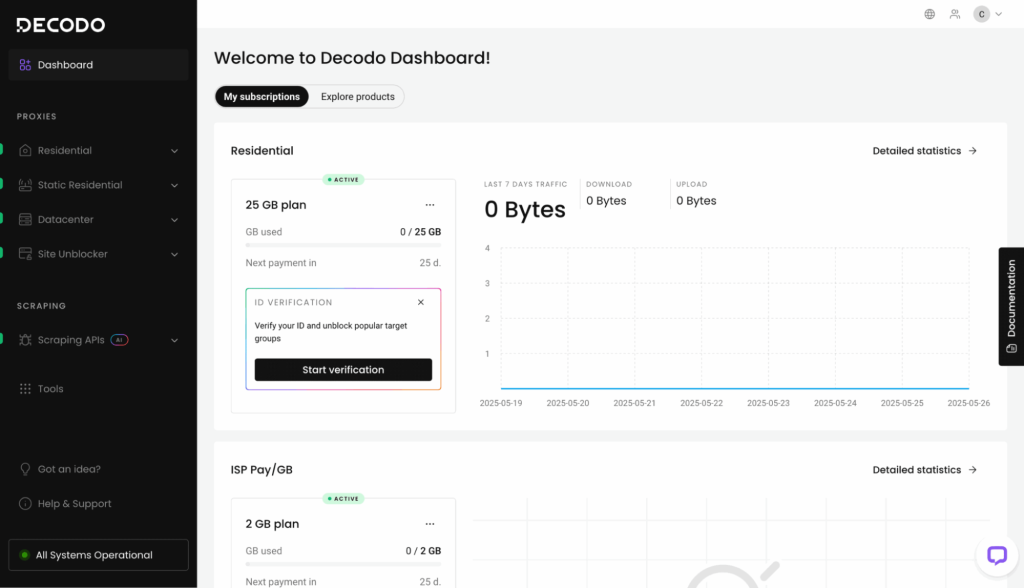
Source: Proxyway
Where Decodo really stands out, though, is usability. It’s one of the easier solutions to get up and running right away, especially compared to the enterprise-first platforms on our list, while still offering enough depth for serious work.
Key features:
All main network types supported
Large IP pool (115M+ across 195+ locations)
User-friendly onboarding and dashboard
Best for agencies, marketers, developers, and growing teams that want a strong balance between usability and price. It is one of the clearest alternatives when buyers compare the best fast proxies providers without going all the way up to enterprise spend.
Webshare is a budget-first option for buyers who want a simpler entry point. Its public residential page highlights 80M+ household IPs and advertises discounted pricing as low as $1.40/GB.
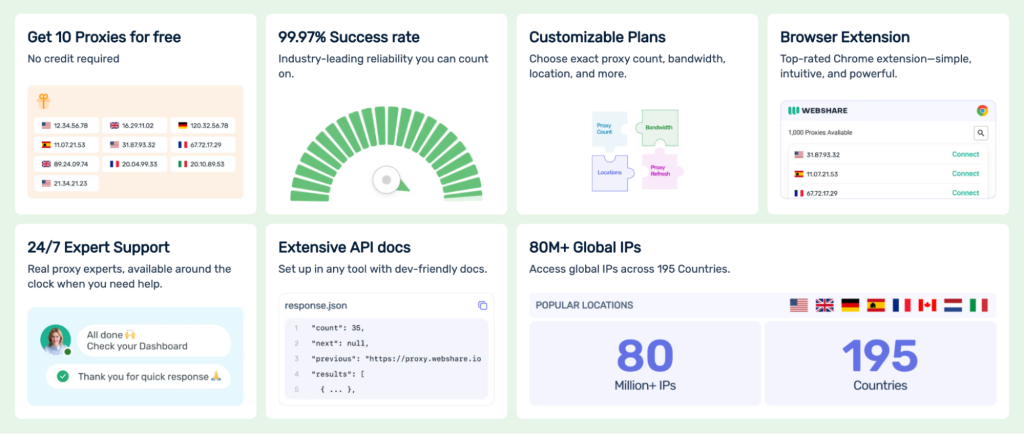
Source: Webshare
Datacenter products are available separately, but nonetheless, this provider makes sense for teams looking for lighter scraping, testing, and smaller automation projects that do not need a full enterprise stack or scalability.
Key features:
80M+ IPs
Discounted pricing tiers from $1.40/GB
Datacenter and home-based IP pool mix
Simple entry point for smaller workloads
Best for price-sensitive buyers looking into best cheap HTTP proxies providers or lightweight infrastructure to get started. Useful, definitely, but not as versatile as some of the stronger all-around options above.
SOAX sits somewhere between budget tools and full enterprise suites. Its public pages advertise 191M+ IPs overall across 195+ locations, with bundled plans starting at $3.60/GB. It also offers a low-cost trial to see the platform in action before committing to larger plans.
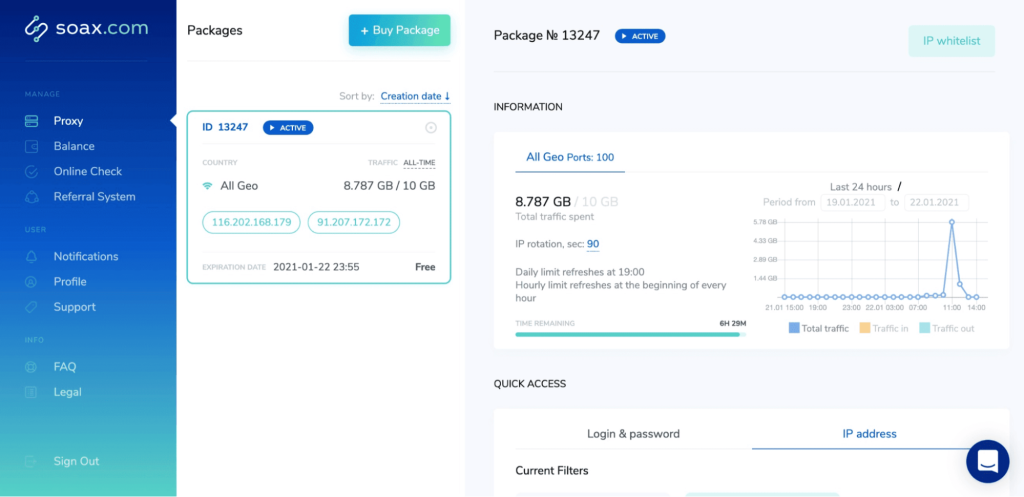
Source: Proxyway
That makes it one of the best premium proxy service options for teams that want a polished product that is more advanced and business-oriented than the lightweight alternatives, but also without stepping straight into any enterprise platforms just yet.
Key features:
191M+ network pool
Bundled plans starting from $3.60/GB
All main network types supported (US mostly)
Low-cost trial available
IPRoyal is a lightweight provider and a good fit for smaller teams, solo buyers, and mixed commercial projects that need flexibility but do not need the extra weight that usually comes with enterprise platforms.
Residential nodes are advertised from $1.75/GB, although the smallest starter plans are priced a bit higher, and the network includes 32M+ IPs across 195+ countries. That gives buyers more than enough coverage for everyday workflows like public-data collection, SEO monitoring, testing, and other account-based tasks.
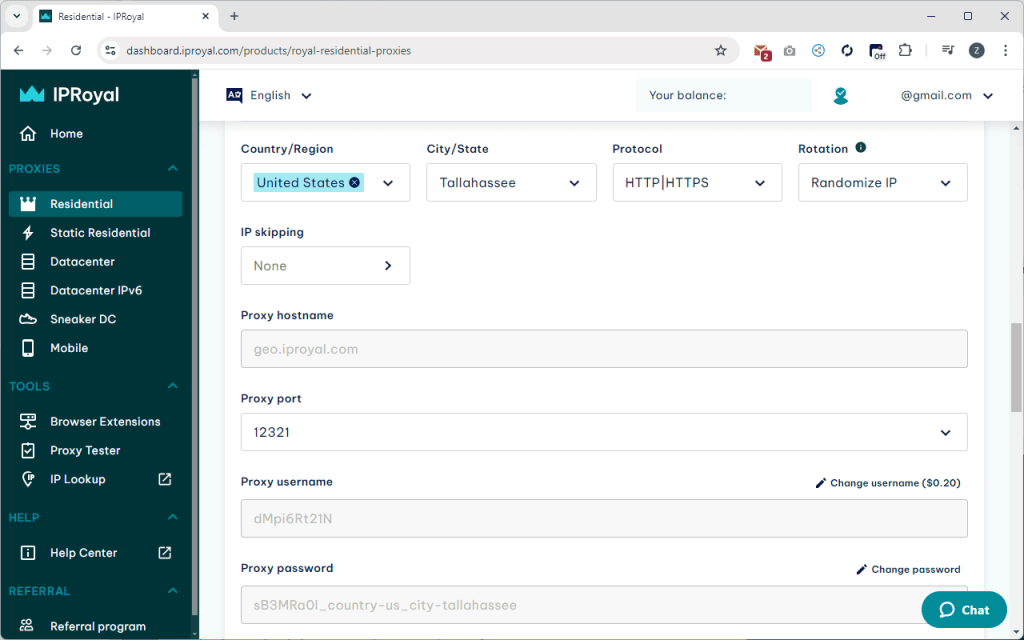
Source: IPRoyal
This platform also offers ISP, cellular, and data center connections too, which makes it more flexible than a lot of budget-focused IPRoyal alternatives.
Key features:
Household proxies from $1.75/GB
32M+ IPs across 195+ countries
The 3 main network types available
Good flexibility for smaller commercial workloads
Best for smaller teams and solo buyers who want access to multiple network types without stepping into serious infrastructure providers. It’s a solid option for mixed-use projects, even if it does not go as deep as most other solutions on our list.
All in all, if you’re wondering, “Which proxy provider is best?”, it ultimately depends on your exact workflows, budget, and requirements. Below are the main picks across the main categories:
For enterprise teams, the best proxy providers are Proxy-Seller, Bright Data, and Oxylabs, all standing out when buyers want multiple network types, affordable and transparent pricing, and room to scale without locking into top-end costs right away. Bright Data and Oxylabs start making more sense when your workloads are big enough to justify the extensive features and premium pricing they come with.
For SMBs and individual buyers looking to buy residential proxy infrastructure, Proxy-Seller is the best all-rounder if you want room to grow, Decodo gives buyers one of the better mid-market mixes of value and usability, while Webshare and IPRoyal are better suited to smaller budgets and more straightforward workflows.
If cost control or a niche setup is the priority, Proxy-Seller is especially strong on low-cost entry across residential, ISP, and IPv6, Webshare handles basic budget tasks well, SOAX is better for teams that want something more curated, and IPRoyal stays relevant as a flexible fallback for smaller projects.
For teams looking to buy IPv6 proxy infrastructure, the shortlist is much shorter — Proxy-Seller is the clearest option here because it publicly offers IPv6 proxies from just $0.16/IP across 17+ countries, which makes it one of the strongest answers for buyers searching for the best IPv6 proxy providers and looking for affordable scale.
For the best IPv4 proxy providers, the easiest breakdown looks like this: residential and mobile IPv4 — Proxy-Seller or Bright Data; datacenter IPv4 — Webshare or Bright Data. Pretty straightforward, and enough to give buyers a clean starting point without overcomplicating the decision.
In summary, the best proxy providers in 2026 are the ones that match your actual workloads, control requirements, and budget without making the whole setup harder than it needs to be.
Some teams need premium infrastructure and additional built-in tools, while others just need a flexible provider that covers more use cases at a lower starting cost.
For buyers looking for the strongest overall mix of quality, flexibility, pricing, support, and room to scale, Proxy-Seller is one of the most complete options on the market right now.
Start by looking at the basics: IP network types, geo coverage, session control, pricing model, and overall reliability. The best proxy IP provider is the one that fits your actual workload and real devices, whether that means SEO monitoring, ad verification, automation, testing, or large-scale public data collection.
For most mixed business workflows, Proxy-Seller offers the strongest balance of cost, network variety, and flexibility. Bright Data and Oxylabs are better suited to larger enterprise operations with more demanding requirements.
Yes. Buyers comparing the best affordable providers should look at Proxy-Seller, Webshare, IPRoyal, and Decodo. Just do not base the whole decision simply on the lowest advertised number alone. In practice, reliability and fit usually matter more over time.
Premium platforms usually offer deeper targeting, broader tooling, stronger support, and more advanced infrastructure. Budget providers focus on simpler setup and lower pricing. The right pick depends on your workload, your data needs, and how much reliability you need in production.

 PHP
PHP Node.js
 Python
 Java
Java Golang
 en
en  Español
  中國人
中國人  Tiếng Việt
  Deutsch
  Українська
  Português
  Français
  भारतीय
  Türkçe
  한국인
한국인  Italiano
  Indonesia
  Polski
Comments: 0