

Most teams that start looking for an IPRoyal alternative in 2026 will already be familiar with the basics. They’ve probably run proxies before, have SEO monitoring or data collection flows in place, and maybe even juggle a few multi-account setups on the side.
What they don’t always have is a clear view of how the top proxy providers compare to one another, especially when it comes to price, geo depth, stability, and compliance, and why many teams choose Proxy-Seller as their main choice.
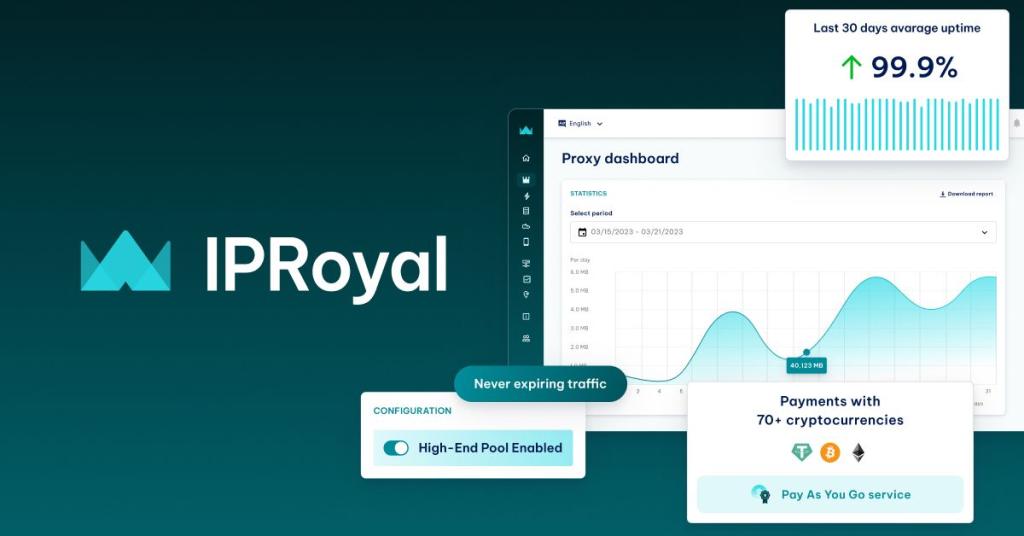
IPRoyal is a proxy provider built for simple, affordable access to several proxy types without pushing you into any heavy enterprise contracts. You get residential, ISP (static residential), datacenter, and mobile proxies, all controlled from a fairly intuitive, self-serve dashboard.
Its residential proxy network is its main selling point, spanning tens of millions of IPs across most regions in a large IP pool, with country, state, and city targeting plus rotating and sticky sessions.
That’s usually enough for local SEO, geo-specific scraping, ad verification, and marketplace research.
Source: IPRoyal
In reality, IPRoyal tends to attract solo devs, growth and performance marketers, and small to mid-size data teams that want:
self-serve signup
unlimited concurrent sessions
predictable, budget-friendly pricing
As these projects grow, many teams begin exploring other IP Royal competitors to see if they can gain better targeting, stronger governance, or more flexible pricing, without losing that cost advantage.
Residential pay-as-you-go starts with small bandwidth bundles at roughly $7 per GB, with the per-GB rate dropping as volume grows. ISP and most datacenter plans are priced per IP, whereas mobile usually follows a flat monthly model.
The reasons teams start hunting for an IPRoyal alternative usually fall into a few categories:
Cheaper, lower-risk pilots → some companies want small tests and bundles with almost no commitment to validate targets, flows, and success rates.
More aggressive default targeting → local SEO, hyper-local ads, and compliance checks often need richer city / ISP targeting, at times with near ZIP-level granularity.
Smoother onboarding → some teams just want to avoid endless back-and-forth, manual reviews, and extra calls to start sending modest volumes of traffic.
Stronger formal compliance → security-minded teams that need documented processes, references to ISO-aligned controls, and a governance story they can present to internal security reviews.
That’s usually where Proxy-Seller and a few other notable IPRoyal alternatives step in.
No matter which IPRoyal alternative you’re considering, the checklist stays roughly the same. You’re comparing: pricing and entry barrier, geo and ISP targeting depth, setup and day-to-day management, security and compliance, and stability and behavior under production-level loads.
The table below condenses these points for the best IPRoyal alternatives on the market in 2026:
|
Provider |
Support |
Min Order / Entry |
IP Pool Types |
Setup Complexity |
Typical Use Cases |
Rotation Options |
|---|---|---|---|---|---|---|
|
IPRoyal |
Chat, email |
Small GB bundles or few IPs |
Residential, ISP, datacenter, mobile |
Simple self-serve panel |
SEO, scraping, ads, multi-accounts |
Rotating + sticky |
|
Proxy-Seller |
24/7 chat, tickets |
$1.99 3-day trial or small plans |
Residential, ISP, mobile, DC IPv4/IPv6 |
Self-serve, no sales call |
SEO, scraping, social, local SEO, automation |
Auto + sticky, high thread limits |
|
Bright Data |
24/7, managers |
Higher pay-as-you-go and plan minimums |
Residential, mobile, ISP, datacenter |
Self-serve + enterprise |
Enterprise scraping, datasets, unlockers |
Rotating + long sticky |
|
Oxylabs |
24/7, SLAs |
Business-oriented GB bundles |
Residential, mobile, ISP, datacenter |
Enterprise-focused |
High-volume data, APIs, SLAs |
Rotating + sticky |
|
Soax |
Chat, email |
Low-cost trial or ~tens of GB |
Residential, mobile, US datacenter |
Self-serve |
SEO, growth, mixed proxy usage |
Rotating + sticky |
|
Smartproxy (Decodo) |
24/7 chat |
Small GB bundles or pay-as-you-go |
Residential, mobile, datacenter |
Simple, tool-rich panel |
SEO, e-commerce, social, scraping tools |
Rotating + sticky |
Both of these platforms run multi-type proxy networks, but the main difference is what they are optimized for. IPRoyal is positioned as a straightforward, budget-friendly option, especially around rotating residential proxies and simple, self-serve use cases.
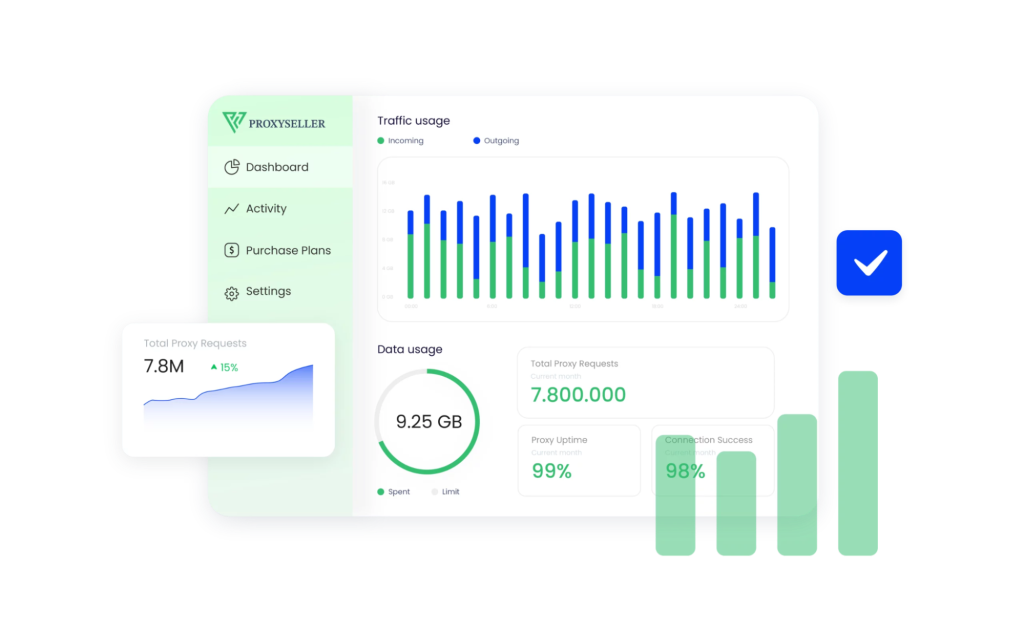
Proxy-Seller, on the other hand, is positioned as a more advanced proxy infrastructure with versatile plans for solo developers, growing teams, and larger enterprises.
Alongside residential proxies, it offers ISP, 4G/5G mobile, and IPv4/IPv6 datacenter IPs, up to 1 Gbps speeds, more precise geo targeting, stricter compliance, HTTP(S) and SOCKS5 support, and multiple authentication modes.
For technical and business teams that want a provider they can grow with, that combination makes Proxy-Seller a very strong, infrastructure-first IPRoyal alternative in its own right.
Source: Multilogin
IPRoyal’s residential plans start with smaller bandwidth bundles in the $7/GB range, dropping as you scale traffic. Some traffic is non-expiring, which is handy if your workload involves one-off projects.
Proxy-Seller offers an affordable 3-day trial at just $1.99, giving you more than enough residential traffic to test real targets, validate your setup, and check success rates. After that, per-GB pricing becomes very competitive at higher volumes, dropping to as low as 0.7/GB at higher tiers.
For a lot of teams, that’s a lower-risk, lower-cost path to testing their potential proxy infrastructure.
IPRoyal offers broad residential coverage across most major regions, plus country, state, and city targeting, while longer-lived sessions can be pushed to ISP/static residential proxies.
Proxy-Seller pushes targeting a bit further — you can pick countries, cities, and often ISPs across residential, mobile, and datacenter pools, with automatic proxy rotation and support for HTTP(S) and SOCKS5 everywhere.
So if your work depends on precise local SEO, multiple account clusters per geo/ISP, or accessing country-specific sites and SERP tracking exactly as local users see them, that extra targeting control is often worth a lot.
IPRoyal keeps the panel simple: sign up, top up, or pick a package, generate endpoints, and plug them into your tools. Residential plans support unlimited concurrent sessions, so scaling is more about your own infrastructure.
Proxy-Seller follows the same general flow but trims friction where it can. You pick proxy type, geo, and term, pay, and get network endpoints right away, and you can either use username/password or IP whitelisting.
IPRoyal has carved out a spot as a cost-effective vendor with decent support and stable, reliable performance for its price bracket.
Proxy-Seller layers a more formal governance story on top — aligning processes with ISO/IEC 27001:2022 and ISO 9001:2015, signalling structured and enterprise-grade information security and quality management.
Combined with strong public reviews and independent benchmarks calling out stability and support, that makes it a very attractive option when your IPRoyal alternative has to get past security and compliance reviews.
IPRoyal aims to handle high concurrency with solid success rates on common targets, which fits tasks like SEO tracking, price monitoring, large-scale web scraping, and multi-account operations.
Proxy-Seller targets the same kind of workloads but doubles down on unlimited threads across many plans, monitoring and troubleshooting guidance, and clear best practices for large parallel jobs.
For small and mid-size teams, that mix of stability, low entry cost, and governance is often exactly what they expect from a primary IPRoyal alternative.
Run a 3-day Proxy-Seller pilot and measure uptime, success rate, and cost per successful request on your core targets.
IPRoyal vs Brightdata is usually a trade-off between platform breadth and pure simplicity + cost.
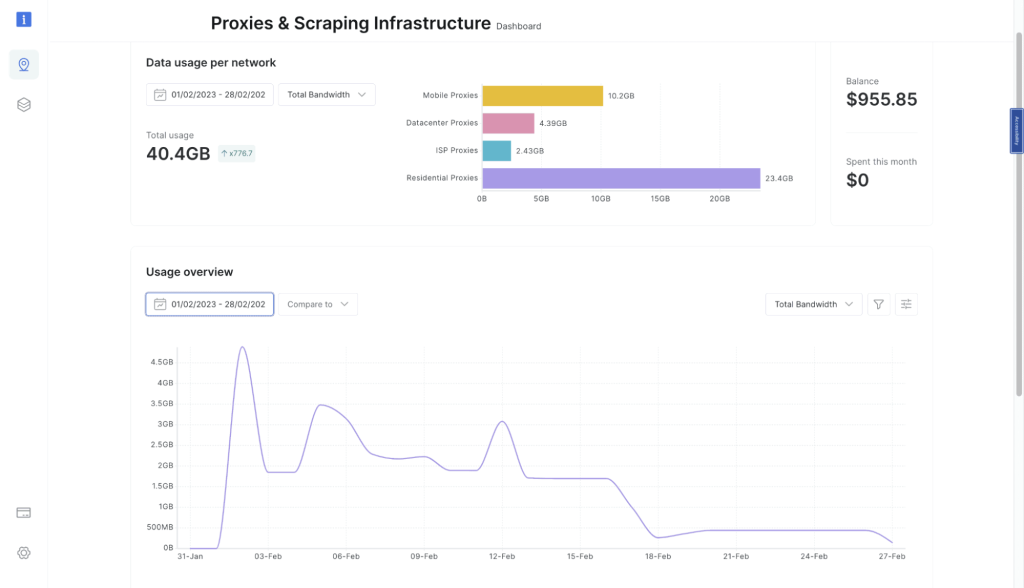
Bright Data is a full web-data platform aimed at enterprises, and beyond large residential, mobile, ISP, and datacenter pools, it offers:
unlockers and web scraping APIs
browser-level integrations
ready-made datasets
Source: Proxyway
So it’s built for companies that want a full data collection stack rather than just IPs. When compared, Bright Data pushes much harder into automation and built-in bypass logic, while its counterpart stays closer to raw proxy infrastructure you plug your own tools into.
Pricing: Bright Data’s pay-as-you-go rates and minimums are clearly higher, especially at low volumes. Smaller residential bundles and more affordable pricing make IPRoyal more approachable for budget-sensitive teams that still want a serious IPRoyal alternative.
Best fit: If you only need proxy access and you’re happy running your own scrapers or tools, both tools will get the job done. But if you need heavy automation, multiple managed tools, and deep integrations, Bright Data becomes a more suitable (but pricier) IPRoyal alternative.
In the IPRoyal vs SOAX matchup, the main difference is how they structure access and billing across proxy types.
Soax is another solid IPRoyal alternative, it presents itself as a modern, flexible platform where a single plan can include stable residential IPs, 4G/5G networks, and other proxies, plus a dedicated Web Data API. You first buy bandwidth, then decide how to split it, which is very handy if you’re running lots of experiments across products.
Functionally, both platforms offer strong geo targeting and frequent IP rotation through rotating vs sticky sessions. Soax emphasizes a single, unified account for proxies and APIs, while the other keeps products clearly separated so you can optimize each line item and spend.
Pricing → SOAX combines low-cost trials with plans that bundle tens of gigabytes at competitive per-GB rates. IPRoyal’s residential pricing can be cheaper at very small scales, especially where non-expiring traffic matches the usage pattern.
Best fit → Go with SOAX if you like a “one credits bucket for everything” setup across proxies and APIs, but if what you’re really after are residential or US ISP proxies with predictable costs, there are better IPRoyal alternative solutions out there.
IPRoyal vs Smartproxy (now branded as Decodo) is a choice between a focused proxy provider and a platform that bundles more tooling for sales and growth teams.
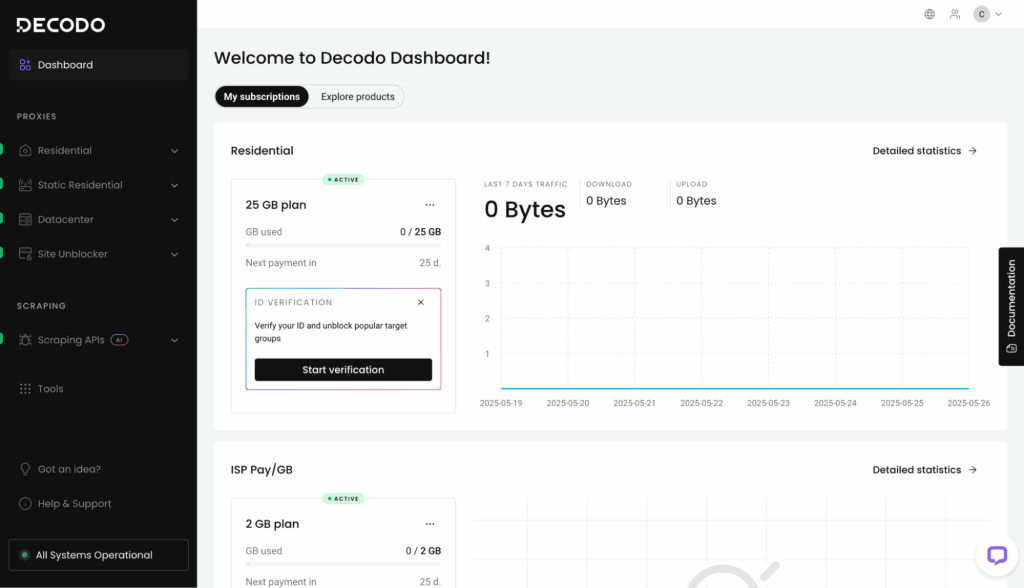
Decodo offers a sizable residential, mobile, and datacenter pool, plus scraping APIs, web unlockers, and its own anti-detect browser.
Source: Proxyway
It’s targeted at users who want more than just IPs and are open to adopting a mini-ecosystem of tools and integrations for e-commerce, growth experiments, and social media management.
IP Royal focuses squarely on core proxy products, which makes it easy to plug into custom setups without taking on additional tooling.
Pricing → Smartproxy/Decodo is competitive for ongoing mid-market usage, especially with stable monthly traffic, but IPRoyal still wins at lower volumes or where non-expiring traffic brings extra value.
Best fit → if all you need is reliable proxies to drop into your existing stack, both tools are easy to justify. If you want more ready-made tools on top of the pool of IP addresses, Decodo becomes a strong IPRoyal alternative.
IPRoyal vs Oxylabs is mostly about scale expectations and enterprise posture, not basic proxy features.
Oxylabs is an enterprise-grade IPRoyal alternative with very large residential, mobile, ISP, and datacenter pools, plus multiple scraper APIs and managed solutions. It targets companies that need:
formal SLAs
strong legal and security backing
very high-volume workloads across many regions
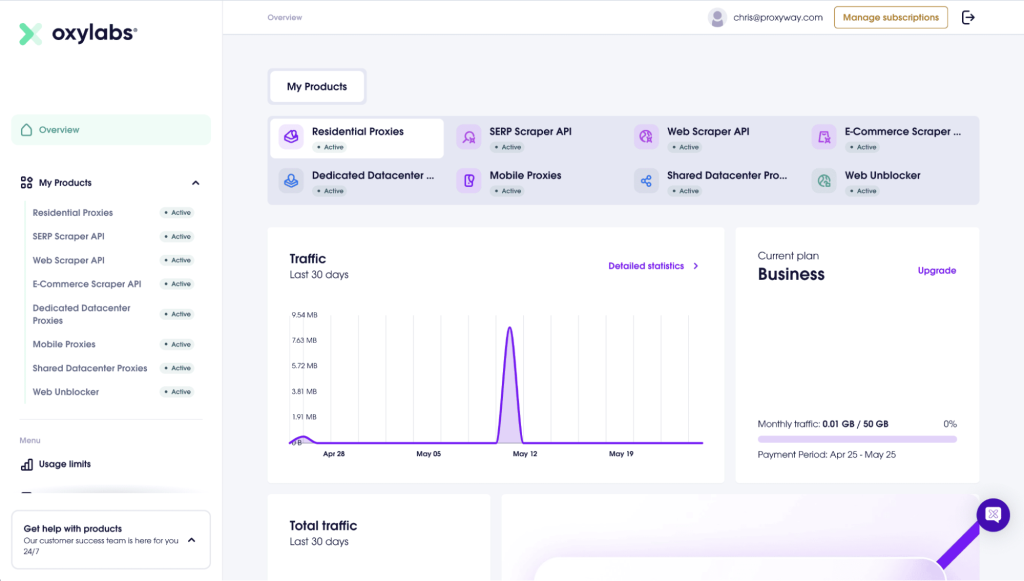
Source: Proxyway
Compared to smaller proxy providers, Oxylabs puts more weight on detailed contracts, dedicated account management, and extensive reporting, rather than a self-serve structure that’s easier for smaller teams to adopt.
Pricing → Oxylabs prices are aimed at high-volume, ongoing usage with per-GB rates and minimums to match, starting at roughly 8 USD per GB, while its counterpart tends to be much more accessible for smaller teams, pilots, and one-off projects.
Best fit → Oxylabs is a good match for large, compliance-heavy organizations that treat proxy infrastructure as business-critical, but it’s not the right IPRoyal alternative when you simply need a solid proxy infrastructure without full enterprise features (and overhead).
No single IPRoyal alternative wins every scenario, so it’s best to group them by what they’re best at and narrow your shortlist from there. Within each group, your top picks will depend on budget, acceptable risk, and how much tooling you want your provider to handle.
For most small and mid-size teams, these two are the best starting solutions. Proxy-Seller brings low-risk trials, granular geo/ISP targeting, and rock-solid compliance, while IPRoyal offers simple proxies, competitive pricing, and an accessible dashboard.
Enterprise platforms and advanced tooling: Bright Data and Oxylabs
If you need deep APIs, managed data products, and formal SLAs, these IP Royal competitors sit at the top. They’re more expensive but provide the additional built-in tools and features that many organizations usually require.
For many teams looking for the best IPRoyal alternative, Proxy-Seller combines top-quality residential, mobile, ISP, and dedicated datacenter proxies with precise geo and ISP targeting, competitive pricing, and enterprise-grade compliance. That mix makes it a robust default choice for both small pilots and long-term, large-scale workloads, including high-speed scraping for LLM pipelines.
Start a short Proxy-Seller trial and see how it handles your real scraping and automation workloads.
Feature pages and comparison tables are useful, but the only real way to choose the right IPRoyal alternative for your team is to see how they behave with your traffic and your workflows. Shortlist two or three providers, send the same workload through each, and track success rate, latency, error patterns, and effective cost per valid result over a realistic test window.
Once you’ve done that, the winner is usually obvious in the numbers. And if Proxy-Seller ends up at the top of that list, you get a proxy server with predictable costs, consistent performance across regions, and enough headroom to support both your current workflows and the scale you’re planning for next.
You’ll find plenty of “free” proxies, but they’re not realistic for production: unstable, slow, overused, and usually sketchy from a compliance standpoint. The smarter move is to use cheap trials or tiny pay-as-you-go plans from serious providers instead of gambling your stack on a free IPRoyal alternative.
For small teams, the best IPRoyal alternatives are the ones that let you start with low spend, a clear dashboard, and support that actually responds. In most cases, that means shortlisting IPRoyal, Proxy-Seller, and maybe one of Soax or Smartproxy (Decodo), then running a quick side-by-side test to see who performs best on your real workload.
When you compare IPRoyal vs Brightdata and other IP Royal competitors, line them up on a few basics: entry pricing, geo/ISP targeting depth, ease of integration, compliance story, and how they behave under load. Enterprise platforms like Bright Data and Oxylabs tend to win on tooling and governance, while providers like Proxy-Seller come out ahead on cost and flexibility.
If compliance is a hard requirement, focus on vendors that can show documented security controls, clear acceptable-use rules, and alignment with recognised standards such as ISO-style information security and quality management. Oxylabs and Bright Data fit well at the enterprise end, while Proxy-Seller often hits the sweet spot for teams that want that same governance mindset without jumping straight into heavy enterprise contracts.

 PHP
PHP Node.js
 Python
 Java
Java Golang
 en
en  Español
  中國人
中國人  Tiếng Việt
  Deutsch
  Українська
  Português
  Français
  भारतीय
  Türkçe
  한국인
한국인  Italiano
  Indonesia
  Polski
Comments: 0